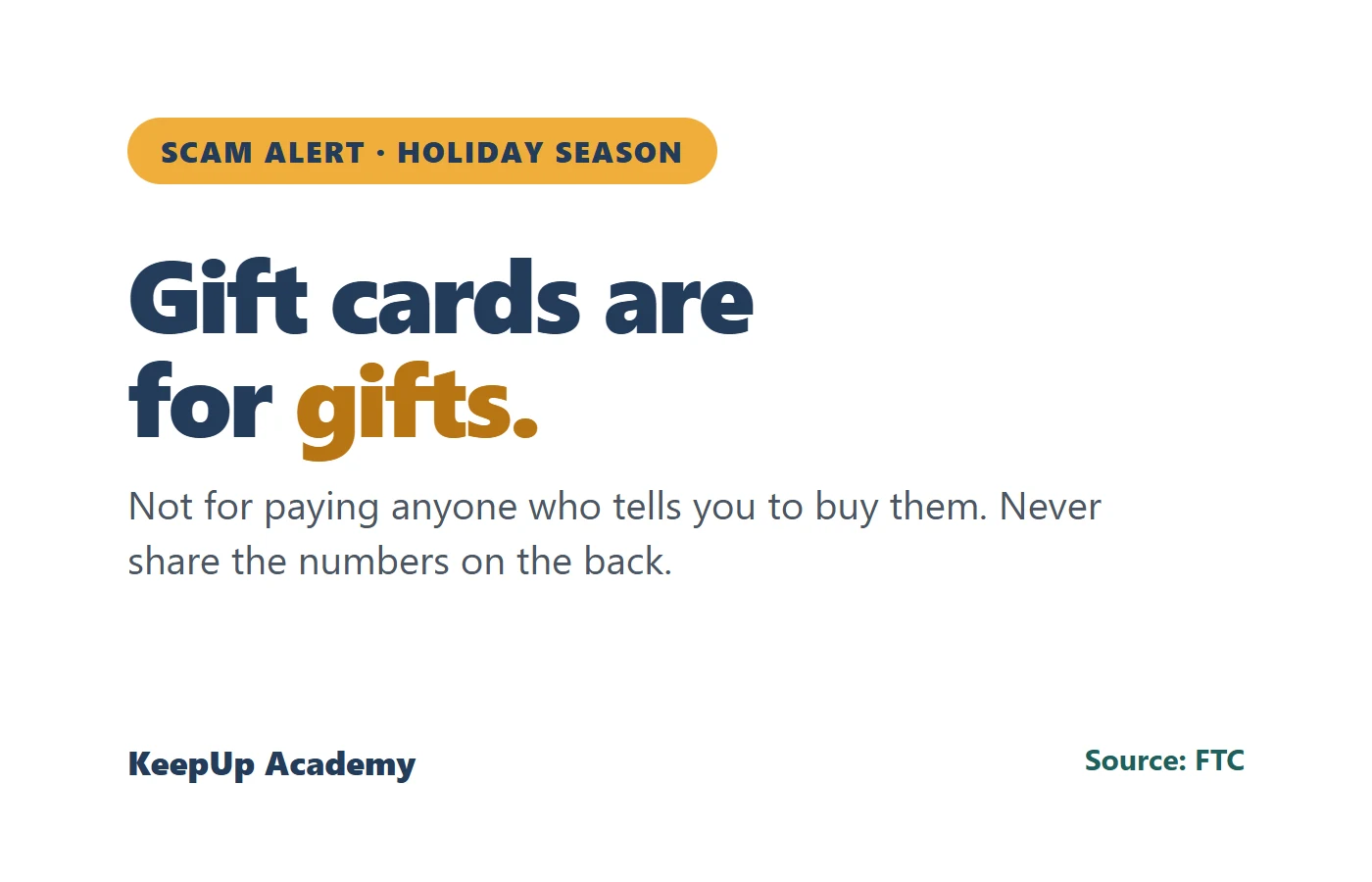
The FTC says these scams usually start with a call, text, email, or social media message. The story changes. The ending doesn’t: buy gift cards and share the numbers.
1. “This is the government”
What you might hear: The caller says they’re from the IRS, the Social Security Administration, or even the FTC, and you have to pay right away.
What the FTC says: No real business or government agency will ever tell you to buy a gift card to pay them.
Source: FTC
2. “It’s me. I need help.”
What you might hear: A friend or family member has an emergency and needs money fast, paid with gift cards.
What the FTC says: Scammers pretend to be people you know, and some can make a voice sound like someone you love. Check with the person yourself, using a number you already know.
Source: FTC
3. “I need a quick favor”
What you might hear: A text or email that seems to come from your boss, or another person you know, asks you to buy gift cards and send the numbers. Some call them “Google certificates” so they don’t have to say “gift cards.”
What the FTC says: The emergency isn’t real. Check with the person first, using a number or email you know is real.
Source: FTC
4. “Something’s wrong with your computer”
What you might hear: Someone says they’re from Microsoft or Apple and your computer has a problem they can fix, for a fee paid in gift cards.
What the FTC says: Only scammers will tell you to buy a gift card to pay them.
Source: FTC
5. “You won a prize”
What you might hear: You’ve won something, but first you have to pay fees with a gift card. Or an email promises a “free gift card” if you share some details.
What the FTC says: Being told to pay a fee with a gift card is the scam. Emails that promise a free gift card in exchange for your personal or financial information are phishing. Don’t click their links.
Source: FTC