Start with the goal.
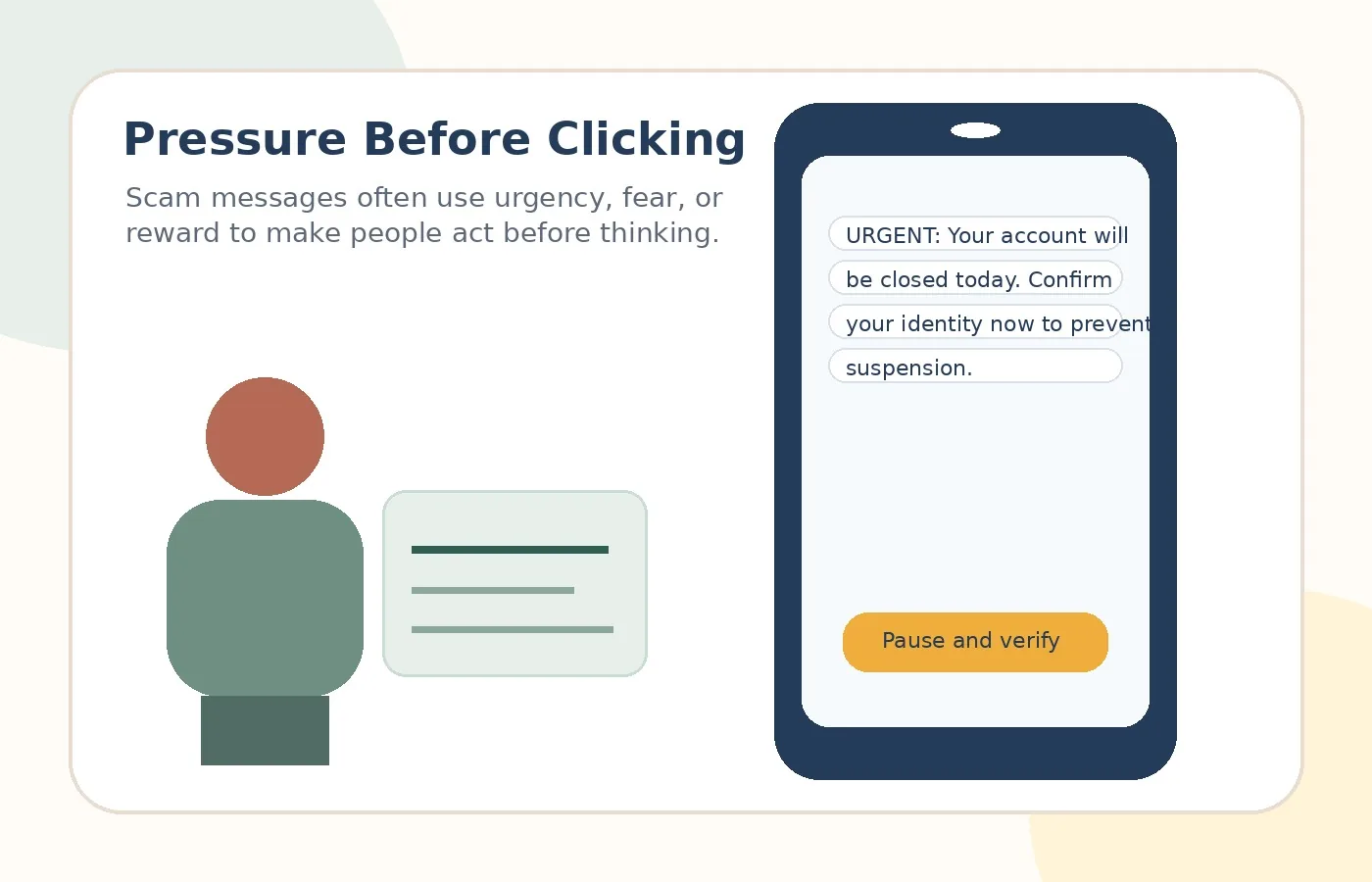
Learn why urgency, fear, and fake authority are some of the biggest warning signs in a scam message.
Learning objectives
Explain why pressure is a common scam tactic.
Recognize urgent words and emotional hooks.
Use a pause-and-verify habit before clicking, replying, paying, or sharing a code.
Why pressure works
Most scam messages are designed to make the next step feel urgent. The scammer wants the person to act before they have time to think, ask a loved one, or verify through an official source. That pressure may sound like a bank warning, a missed package, a prize, a family emergency, a computer problem, or a threat that an account will close.
For older adults, the pressure can feel even stronger when the message connects to everyday responsibilities: medication deliveries, bank accounts, Social Security, Medicare, utilities, phone service, taxes, or a family member who may need help.
Real-world examples
Account locked
Safer move: Open the official app or website yourself. Do not use the message link.
Missed package
Safer move: Check the delivery company directly or contact the store/pharmacy where the order came from.
Payment failed
Subject: Payment failed
Safer move: Open the service app or website directly instead of using the email link.
Family emergency
Safer move: Call the person’s known number or another trusted family member first.
Practice scenarios
Maria and the medication delivery
Maria is waiting on medication by mail. A text says delivery failed and asks for a redelivery fee. Because she is already expecting something important, the message feels believable.
Safer move: She does not tap the link. She calls the pharmacy or checks the official delivery site.
Robert and the bank warning
Robert receives an alert that says his account will be suspended. The message asks him to verify immediately.
Safer move: He opens the bank app directly or calls the number on the back of his card.
Evelyn and the streaming service
Evelyn gets an email saying her streaming account payment failed. The email looks official and has a large button.
Safer move: She opens the streaming app on her TV or phone instead of clicking the email.
Risky vs. safer choice
Risky reaction
React inside the message because it feels urgent, official, or emotional.
Safer reaction
Pause, leave the message, and verify through an official app, website, statement, card, or known phone number.